The BNP and Simple Democracies
If people vote for the BNP, they will get seats. There is nothing wrong with an electoral system that translates votes into seats and anyone who would blame this on PR would also have to bear in mind that in this case the regions where BNP MEPs were elected also have other MEPs representing them as well, as opposed to the constituents of Lancashire county council’s Padiham and Burnley West where under a FPTP system a majority of people voted against the BNP yet ended up with a single BNP councillor for all of them. Even the inadequate form of PR used in our European Elections deals with extremist parties like the BNP better than FPTP.
The interesting thing from my perspective is they got in with fewer votes than were received at the last election when they didn’t receive a seat. This is a more general problem with working with proportions of votes cast as MEPs in different regions can be elected by similar vote shares but radically different number of votes. This is because we operate a democracy based on the fixed power of selectees rather than electors and if you try to build a system the other way round you get something like my Delegated Vote system, which avoids exactly this kind of problem by giving the vote a fixed value and working on from there.
Annoyingly the best description of how this system works is a pretty but slightly out of date video and a site I haven’t updated in well over a year now as I’m working on a longer, more formal description of the system which I hope to really get nailed together sometime in the next year (a few issues with the candidate selection and placement mechanisms are causing difficulty). At some point it expanded into being better described as a new form of democracy, which made the work slightly longer. This paragraph from my current draft sums up my current thinking on the difference between the current form of democracy (simple democracy) and what I see as a fairer alternative (full democracy):
Most modern democracies operate on the principle of ‘popular sovereignty’ where the ultimate source of political authority is said to rest with ‘the people’. Most talk of ‘the people’ tends to be of an abstract collective - the idea that ‘the people’ is in reality made up of many individual persons is much more rarely expressed. Whilst popular sovereignty deals with the idea that ‘the people’ are the source of democratic legitimacy, a different take on it would be as a mass transfer of individual sovereignty from persons to the state through the mechanism of elections. Despite their similarities these two concepts are not identical and the latter is not a description of how modern democracies currently function. These two different conceptions of popular sovereignty lead to what I’m going to call Simple and Full Democracies. A Simple Democracy is one which acknowledges ‘the people’ en masse as a source of political legitimacy. Elections are held which determine the composition of legislatures but have no significance beyond that – If half the voters had not voted, the resulting legislature could be identical. Variations in turnout and majority are inconsequential to power in the chamber – all legislators have one vote. The alternative to this is Full Democracy – where persons are dealt with as raw numbers. Voting is a mechanistic act of the temporary transfer of sovereignty from one individual to their representative within the state. The election is expressed fully in the resulting legislature by tying the voting power of representatives to the number of votes they received at elections, giving us equal voters but unequal legislators. In taking the concept of popular sovereignty beyond an abstraction to the point where we can mechanically handle it, many of the problems that plague voting systems conducted in a simple democracy disappear easily.
I’m not entirely tied to ‘Simple’ and ‘Full’, but I think it gets the distinction across nicely whilst acknowledging that for any number of uses there’s nothing wrong with a ‘simple’ system, whilst a ‘full’ democracy is not necessarily any more complex than any number of systems that operate in simple democracies.
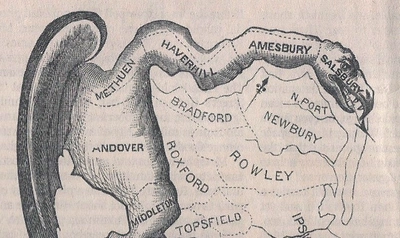
The most important part of this system is that it breaks the conflict between proportionality and locality all systems operating in a Simple Democracy experience and allows for systems like the Delegated Vote which would theoretically allow 100% proportionality with roughly the same number of MPs working in slightly larger constituencies than present (other fringe benefits include no requirement for equal constituency sizes, the impossibility of gerrymandering and creates a positive reward for turnout in all conditions).
The kind of system it can lead to is probably something that would let the BNP in far more often, but always in exact proportion to the votes cast and with none of this silly nonsense that’s true in our current system that not voting in effect works in the BNPs (or any small parties) favour in some areas. The goal is to create a system where your vote is completely isolated from the ability of other votes to change its value or effectiveness and whilst I’m not quite sure my system is there yet, I think something like what I’m describing is the next logical step for representative democracies to take.
Unbelievable
Watch this:
Then read this:
“What happened in some schools cannot be compared with the millions of lives that have been destroyed by abortion. It [abortion] has legally destroyed 40 million human lives.” - Cardinal Antonio Canizares
But he just did, he just trivialized the abuse of thousands of people in which the Church had a hand and used them as a football to make his point. I don’t care what the context is, you don’t get to do that. You just don’t.
[h/t Barefoot Bum]
The bigger picture
James Graham has an excellent post today on broader reform besides the electoral system. I agree that it’s absolutely vital we have a broader view of the complete screw-up that is our political system but also that electoral reform is the key issue because without it we’ll be stuck with MPs who are opposed to reform at every point. We only have room to get so much done here, the reforms we do focus on should count for the long haul.
Three-member STV (the current ERS recommendation) isn’t perfect (it’s not as proportional as it could be) but it will get us some of the way there and, all going to plan, will give us far larger windows in future to make important changes than this narrow one that exists right now - such as a switch up to seven-member STV (or really far down the line some future version of my Delegated Vote system…I can dream) when we get comfortable with the idea of our multi-member constituencies. The first step is to stop having a crap system that opposes reform full-stop and replace it with an OK system, then we can start getting serious about what change needs to happen where. Then at the end of the line when we have a good solid system, we can do what civilised countries do and write the thing down.
That this incrementalist approach is in a very British tradition is something that voices from the The Telegraph (having opened Pandora’s Box and to their horror discovered PR anoraks inside) are naturally keen to play down. It’s a little worrying that people are talking about AV+ like it’s a radical change and not the fudge it is, obviously we need more far-out fringes to put the modest early steps in perspective and as such, I consider it my duty to talk like a complete nutter and make everyone else seem more reasonable.
Then again, maybe I’m wrong about that and we’ll be having a constitutional convention in a few years to get this all hammered out once and for all, who knows? It’s going to be a long time while we get this right (or before we have much idea about where this is going), but as the days go by and the momentum builds I’m more and more confident we’re standing at the beginning of this process rather than just dreaming about it. Interesting times.
People who don’t get it
Johnson’s AV+ isn’t really much of an improvement on the current system but at least he gets what’s going on here, as opposed to some other Labour MPs:
But Sir Stuart Bell, Labour MP for Middlesbrough, said Mr Johnson’s electoral reform proposals had little support in the House of Commons and would never be implemented.
“The idea of proportional representation is simply not popular in our party, it’s not popular in the Tory party, and even if there was a referendum held, it would not be binding,” he said.
“It could only be consultative, and a sovereign Parliament, elected after the next election, would simply ignore it.”
He’s right on all the facts there of course, but I am really amazed that any politician at this point is blind enough to demonstrate out so exactly the attitude that needs to go. That Parliament itself is sovereign and not the people is true, but it shouldn’t be this way - the British system needs to catch up to where some other democracies were centuries ago and acknowledge that the root of our government’s sovereignty comes from the people that elected them, not from the magic sovereignty dust that the Queen sprinkles before her speech.
That Bell doesn’t get that there is something dodgy about the idea that Parliament as a club can safely ignore the results of referenda because its not in the current crop’s best interest is revealing. This is the culture that needs to change and yes, some MPs aren’t going to like it. Tough really.
Internships
There’s a convincing argument that unpaid internships (in media and politics especiallly) are bad for social mobility as they for the most part will only be taken up by those who can afford to support themselves for that long without paid work. Alternatively, you can see them as an introduction into a world that wouldn’t have been able to offer the experience if they had to pay people.
Someone paying $13,000 dollars for an internship at the Huffington Post of all places does seem to be pushing it a bit far however.
I don’t really have much to say on the matter
New Archbishop of Westminster shows he is clearly no more in touch with reality than his predecessor:
The new and the departing Archbishops of Westminster launched a joint offensive yesterday against atheists and secular society.
At the installation of the Most Rev Vincent Nichols at Westminster Cathedral, his predecessor, Cardinal Cormac Murphy-O’Connor, described a lack of faith as “the greatest of evils” and blamed atheism for war and destruction, implying that it was a greater evil even than sin itself. After receiving the crozier marking the office, Archbishop Nichols, glitteringly vested in newly minted gold mitre and chasuble, also defended faith against the secular agenda.
…
Cardinal Murphy-O’Connor went farther. Referring to the battles that will be won and lost in the effort to sustain the Christian presence in secular society, he said: “What is most crucial is the prayer that we express every day in the Our Father, when we say ‘deliver us from evil’. The evil we ask to be delivered from is not essentially the evil of sin, though that is clear, but in the mind of Jesus it is more importantly a loss of faith. For Jesus, the inability to believe in God and to live by faith is the greatest of evils.
“You see the things that result from this are an affront to human dignity, destruction of trust between peoples, the rule of egoism and the loss of peace. One can never have true justice, true peace, if God becomes meaningless to people.”
So the worst thing possible you can do is not believe? Not murder, not genocide, not (just to pull something random out of the hat) child abuse? Not believing is worse than all of those? That seems like a decent moral code right?
It’s horrifying that people like this are taken seriously.
Now is the moment to push for electoral reform
I find myself feeling quite optimistic about the Electoral Reform Society’s campaign for a referendum on STV, or at the least I can’t imagine a better moment for it. The standard problem with electoral reform is it needs the support of those people it would disadvantage most: MPs. It requires that a government that has comfortable power must be willing to throw away the certainty of keeping that and that MPs must vote for something that (as one certainty of any more proportional system is we will have less Labour and Conservative MPs) might well lose them their jobs.
This barrier to reform might not be as insurmountable as it used to be. Labour is on the wayout, but for the moment still has power - a switch to STV sometime within the next few years is likely to benefit the party which might otherwise be locked out of power for a good while and in the event of large public support, it can safely go along with the idea of a referendum without appearing entirely self-interested. If we can build the outside support, the conditions are better than they’re likely to be for a while to carry this forward - everyone’s self interest is aligned in the direction of a fairer voting system. The window is narrow however, as this is only true while the reform is popular and Labour is in power but doomed. I’m sceptical given that how Labour managed to back out of its commitment to a form of PR that we can expect too much out of a future Conservative government on the issue - it’d just be too tempting for them leave it be.
In the event that this all doesn’t work out perfectly, I’m still floating the idea that increasing the number of MPs would make an excellent companion reform to STV, as it would reduce the size of our triple-constituencies, easing the mind of some doubters worried about the ‘constituency-link’ in enlarged constituencies, and would also act as an incentive for current MPs because it reduces the problem of turkeys voting for Christmas by making sure that the new proportionality would be accounted for by new MPs. This isn’t quite as bad as it sounds because STV means voters would get the chance to vote around them for other candidates in the same party, meaning we wouldn’t be ensuring current MPs positions, we simply wouldn’t be guaranteeing that they’d lose them.
While I’m serious in thinking this is a good idea (given certain conditions), I accept that the anti-politician climate at the moment means that talk about increasing the number of MPs would be a terrible thing for anyone serious to get caught saying. I don’t think we need more MPs to make STV work (indeed having ‘STV and more MPs’ as the referendum question would be the perfect way to kill it), and the climate at the moment means it might just work anyway, I just think if the conditions deteriorate or public support is less than spectacular it might sweeten the deal for those opposed and give other ways to push reform forward.
(Incidentally Nick Clegg did a quick stop in Durham today and, fairly redundantly, I asked him if he supported a referendum on STV - unsurprisingly he was all for it.)
(Update 25/05/09: Yeah, the more I think about this the more I think I’m being counter-intuitive for the sake of being counter-intuitive and that’s annoying me. There’s no need for convoluted schemes to bring this about, the amazing amount of momentum that’s developed the last few days makes me very hopeful this might just happen. )
Happy smiling white folk
That the BNP would resort to iStockPhoto and make up testimony rather than find actual supporters to feature in their election material is not a huge surprise (Why? It can’t be that hard to find them, I’ve got the list right here! - Ed.), but it does raise the issue that several of our committed BNP supporters might not even be British. Unsurprisingly “Use that depicts personal endorsement by model” is against the rules, but then ethics (Like ethnics! ho ho! - Ed.) are a general problem for the BNP. Moving on from the stock people, wonderfully the Spitfire used to fight the ‘Battle for Britain 2009′ belonged to the 303 Polish squadron - which just isn’t on really, they’re not just stealing our jobs, but our planes too?
…
Hang on, don’t I edit this myself? (Shh - Ed.)
Again on the number of MPs
Glad to to see agrees with me that reducing the number of MPs is a bad idea.
Wondering where this idea that fewer MPs was better came from, I tracked down a paper arguing that there is an optimal number of represenatives (527 in the UK’s case). It’s interesting stuff, but I think it’s one of our least pressing concerns and it’s something that if done before electoral reform makes the case for multi-member harder to sell to the reluctant (if that’s even possible). It’s attractive because it’s simple and LESS POLITICIANS WOOO is much easier to get across, but it doesn’t fix our problems and every moment spent talking about it should be spent talking about how electoral reform is at the root of everything and how we need it right now.
It gets worse the more we know.
Terrifying. I can’t believe they even made this, imagine what would have happened if it leaked during the beginning of the war? “This is not a religious crusade” rings that little bit more hollow when you quote God ordering to go to war on the intelligence briefings.
(h/t Daylight Atheism)